

Bladder leaks have a way of changing ordinary decisions. A laugh may come with hesitation. A workout might require planning around the nearest restroom. Even a cough or sneeze can become something you brace for. While urinary incontinence is common, living around it doesn’t have to become your permanent routine.
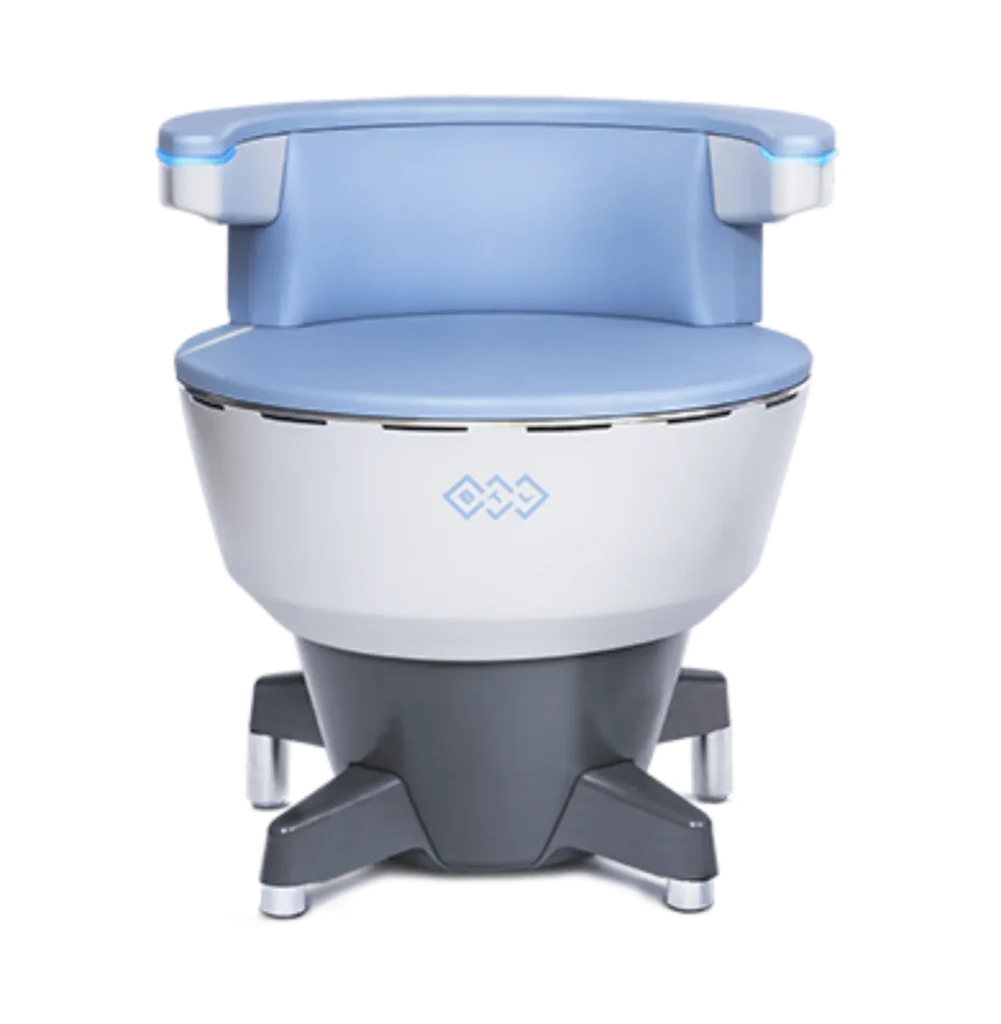
For appropriate patients, Emsella offers a completely non-invasive way to strengthen the pelvic floor without surgery or an internal procedure. You simply sit on a specialized chair while electromagnetic energy stimulates powerful pelvic floor contractions. But can sitting in a chair really make a difference in bladder control?
Keep reading to see how the technology works, which types of leakage it may address, and what Emsella candidacy actually looks like.
What Is Emsella?
Emsella is a non-surgical, non-invasive treatment designed to strengthen weakened pelvic floor muscles associated with urinary incontinence. Rather than requiring patients to consciously contract those muscles over and over, the Emsella chair uses high-intensity focused electromagnetic, or HIFEM, energy to stimulate supramaximal pelvic floor contractions.
These contractions are stronger and more frequent than what most people could intentionally perform during a traditional pelvic floor exercise session.
Here are a few basics worth knowing:
- Patients remain fully clothed and sit on the Emsella chair during treatment.
- HIFEM energy stimulates repeated contractions throughout the pelvic floor.
- A typical treatment session lasts about 30 minutes.
- The provided treatment protocol recommends sessions twice weekly for three weeks.
- Thousands of contractions can occur during a single appointment.
- Treatment doesn’t require incisions, injections, anesthesia, or surgical recovery.
- Some patients may notice changes relatively early, while others require several sessions before noticing improvement.
You may also hear Emsella casually described as a Kegel chair because of its ability to repeatedly activate the pelvic floor. That description makes the concept easy to understand, but Emsella and voluntary Kegel exercises aren’t identical. Emsella produces rapid supramaximal contractions that would be extremely difficult to reproduce voluntarily.
The goal isn’t simply to make the muscles contract during your appointment. The larger objective is pelvic floor strengthening, which may provide better support for bladder control over time.
How Emsella Targets Bladder Leaks
Urinary leakage can have several causes, which is why understanding what’s behind the symptoms matters. When weakened pelvic floor muscles are contributing to the problem, Emsella offers a way to repeatedly stimulate and retrain this important muscular support system.
It Reaches the Pelvic Floor Without an Internal Procedure
One of Emsella’s most distinctive features is how straightforward the treatment experience is. You don’t need an incision. Nothing is injected. There is no internal applicator.
Patients simply sit on the chair while remaining clothed as electromagnetic energy stimulates the pelvic floor. This makes Emsella a particularly approachable non-surgical incontinence treatment for patients who feel uncomfortable with more invasive procedures or who aren’t interested in surgery.
During the session, patients typically feel strong pelvic floor contractions and tingling. The sensation can be unusual at first because muscles are contracting repeatedly without you consciously initiating each movement.
Afterward, there is no surgical wound to care for and no anesthesia to recover from. Patients can generally return to normal daily activities immediately. That convenience is important because successful treatment isn’t only about what a technology can accomplish. It also needs to fit realistically into someone’s life.
It Creates Thousands of Pelvic Floor Contractions
Anyone who has tried Kegel exercises knows that consistency can be harder than it sounds. You first have to identify the correct muscles. Then you need to contract them properly, avoid compensating with surrounding muscles, and repeat the exercise consistently. Even when someone follows those steps, voluntary contractions have natural limitations.
Emsella changes the equation by producing supramaximal contractions through HIFEM energy. According to the provided treatment information, a 30-minute Emsella session produces the equivalent of more than 10,000 Kegel contractions. The point isn’t that traditional pelvic floor exercises have no value. Rather, Emsella offers a different intensity and volume of muscle stimulation within a relatively short appointment.
That makes the nickname Kegel chair understandable, although the technology goes beyond simply reminding you to squeeze your pelvic muscles. Repeated stimulation is intended to recondition weakened pelvic floor muscles. As those muscles become stronger, they may provide greater support to the structures involved in urinary control.
It May Help With Stress Incontinence
Do leaks happen when you laugh, cough, sneeze, jump, or exercise? That pattern may be associated with stress urinary incontinence. Despite the name, “stress” here doesn’t mean emotional stress. It refers to physical pressure placed on the bladder.
When pressure suddenly increases and pelvic support isn’t sufficient, urine may leak. Pregnancy, childbirth, aging, hormonal changes, and other factors can contribute to pelvic floor weakness. This helps explain why urinary incontinence women experience can become particularly noticeable after childbirth or later in adulthood.
Strengthening the pelvic floor can help improve the muscular support involved in continence. Because Emsella directly stimulates these muscles, it may be considered for appropriate patients with stress-related leakage.
Imagine being able to sneeze without automatically crossing your legs or exercise without planning for leakage. Those seemingly small changes can have a meaningful effect on everyday confidence.
It May Address Urge and Mixed Incontinence
Not every bladder leak happens during a cough or workout. Some patients experience a sudden, intense need to urinate and have difficulty reaching the restroom before leakage occurs. This is generally described as urge incontinence.
Others have mixed incontinence, meaning they experience characteristics of both stress and urge leakage. The supplied treatment information indicates that Emsella may be used for stress, urge, or mixed urinary incontinence. However, that doesn’t mean every person with urgency is automatically a candidate.
Frequent or urgent urination can have different causes. Infection, medications, bladder disorders, neurological conditions, and other medical concerns can influence urinary symptoms. That’s why evaluation matters.
A treatment that strengthens the pelvic floor may be useful when muscular weakness contributes to the symptoms, but urinary problems shouldn’t automatically be assumed to come from weak muscles.
It Helps Rebuild Muscular Support
The pelvic floor isn’t one small muscle. It’s a coordinated group of muscles and connective tissues forming a supportive base beneath the pelvic organs. These muscles participate in bladder and bowel control while also supporting structures such as the bladder and reproductive organs. When pelvic floor strength declines, that support system can become less effective.
Emsella’s repeated contractions are designed to challenge and recondition these muscles. You can think of it as a concentrated muscular training session, although the technology performs the stimulation rather than requiring thousands of voluntary repetitions. This is the central idea behind pelvic floor strengthening with Emsella.
The goal isn’t to temporarily hide leakage. It is to improve the function of muscles involved in bladder control. Results won’t necessarily feel identical for every patient. Some may notice changes earlier, while others need multiple sessions before improvement becomes apparent.
It Removes the Guesswork From Kegels
Kegel exercises sound simple until you try to perform them correctly. Some people accidentally contract their abdominal, thigh, or gluteal muscles instead of properly engaging the pelvic floor. Others struggle to maintain a routine long enough to notice meaningful changes.
Emsella doesn’t depend on remembering an exercise schedule throughout the day. The electromagnetic field stimulates the targeted muscles while you remain seated. This can be appealing to patients who have struggled with consistency or aren’t confident they’re performing pelvic floor exercises correctly.
That doesn’t necessarily mean Emsella replaces every other form of pelvic floor care. Some patients may still benefit from exercises or pelvic floor physical therapy as part of a broader strategy. Instead, Emsella provides another option when appropriate, particularly for people looking for a structured and non-invasive approach.
It Fits Into a Busy Schedule
Treatment adherence matters. A procedure isn’t especially practical if your schedule makes completing the recommended series nearly impossible. Emsella sessions are approximately 30 minutes, and the provided protocol calls for treatment twice weekly over three weeks. Because the procedure is non-invasive, it doesn’t require a lengthy recovery period afterward.
For busy patients researching bladder leakage treatment in Michigan, this can be a significant advantage. You don’t have to plan around incisions healing or take extended time away from normal responsibilities. The treatment can often fit into an ordinary day more easily than a surgical procedure.
The relatively short treatment series can also make progress feel manageable. Instead of an indefinite commitment, patients follow a defined course based on their individualized treatment plan.

Sit Down for a Different Approach to Bladder Control
Bladder leaks can affect exercise, travel, social plans, intimacy, and confidence, but embarrassment shouldn’t keep you from discussing them. When pelvic floor weakness is contributing to the problem, non-invasive treatment may offer another path forward.
A Fine Line Aesthetics in St. Milford and Canton, MI, offers Emsella for patients interested in a convenient, non-surgical approach to pelvic floor strengthening and urinary leakage.
A personalized consultation can help determine whether Emsella fits your symptoms, medical history, and goals so you can explore bladder control with a plan designed around you.
Call us now to schedule your appointment!

